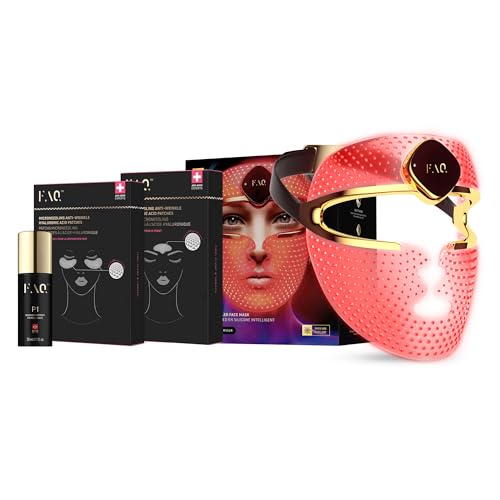
LED face masks apply specific wavelengths of light to the skin — usually red for general skin quality and blue aimed at acne-causing bacteria. The technology has genuine clinical grounding at professional strengths, and the honest question with a home device is dose: consumer masks are considerably less powerful than in-clinic equipment, so results are slower and more modest where they appear at all. Consistency matters more than any single feature, because the studies that show effects use several sessions weekly over months. The picks below are masks available on Amazon UK, ranked on customer rating weighted by review volume. Prices in this category vary enormously without a reliable relationship to output.
We compare every product in this category on customer rating, review volume, price and listed ingredients. We do not accept payment for placement, and we do not test products ourselves — the ranking reflects what Amazon UK shoppers actually rated.
Prices and availability are accurate as of the date shown and are subject to change on Amazon.
What to look for
Wavelength should be stated, not implied
Red light is typically around 630 to 660 nanometres, near-infrared around 830, blue around 415. A device that markets colours without publishing wavelengths is asking to be taken on trust.
Coverage and fit determine the real dose
A rigid mask that sits away from the face delivers less light to the skin than a flexible one that follows its contours. Fit is a bigger practical factor than the LED count on the box.
Session length and frequency are the commitment
Most protocols are 10 to 20 minutes, three to five times a week, sustained over months. If that does not fit your life, the device will not work for you regardless of its specification.
Eye protection should be included
Bright LEDs at close range are uncomfortable and, with near-infrared, are worth shielding properly. Reputable devices supply goggles or a design that covers the eyes.
Medical claims are a warning sign
Cosmetic devices may not lawfully claim to treat medical conditions in the UK. Listings promising to cure acne or eliminate wrinkles are overstating what they can deliver.
Check the safety marking
Look for UKCA or CE marking and clear manufacturer details. This is an electrical device used against the face, and the cheapest listings are often the ones with the least traceable provenance.
Frequently asked questions
Do LED face masks work?
There is reasonable evidence for red and blue light affecting skin at clinical doses. Home devices are weaker, so any effect is slower and subtler. They are best understood as a gradual addition to a routine rather than a treatment.
How often should I use one?
Most manufacturers recommend 10 to 20 minutes, three to five times a week. Results in published studies appear over eight to twelve weeks of consistent use, not after a handful of sessions.
Are LED masks safe for the eyes?
Use the eye protection supplied and keep eyes closed during sessions. If you have an eye condition or take medication that increases light sensitivity, check with a doctor first.
Red or blue light — which do I need?
Red is generally used for overall skin quality and fine lines; blue targets the bacteria involved in acne. Many masks offer both, which is useful if your concerns change.
Can I use one if I am pregnant or on medication?
Ask a doctor or pharmacist first. Some medications, including certain acne treatments and antibiotics, increase light sensitivity — this is a question for a professional, not a shopping site.